
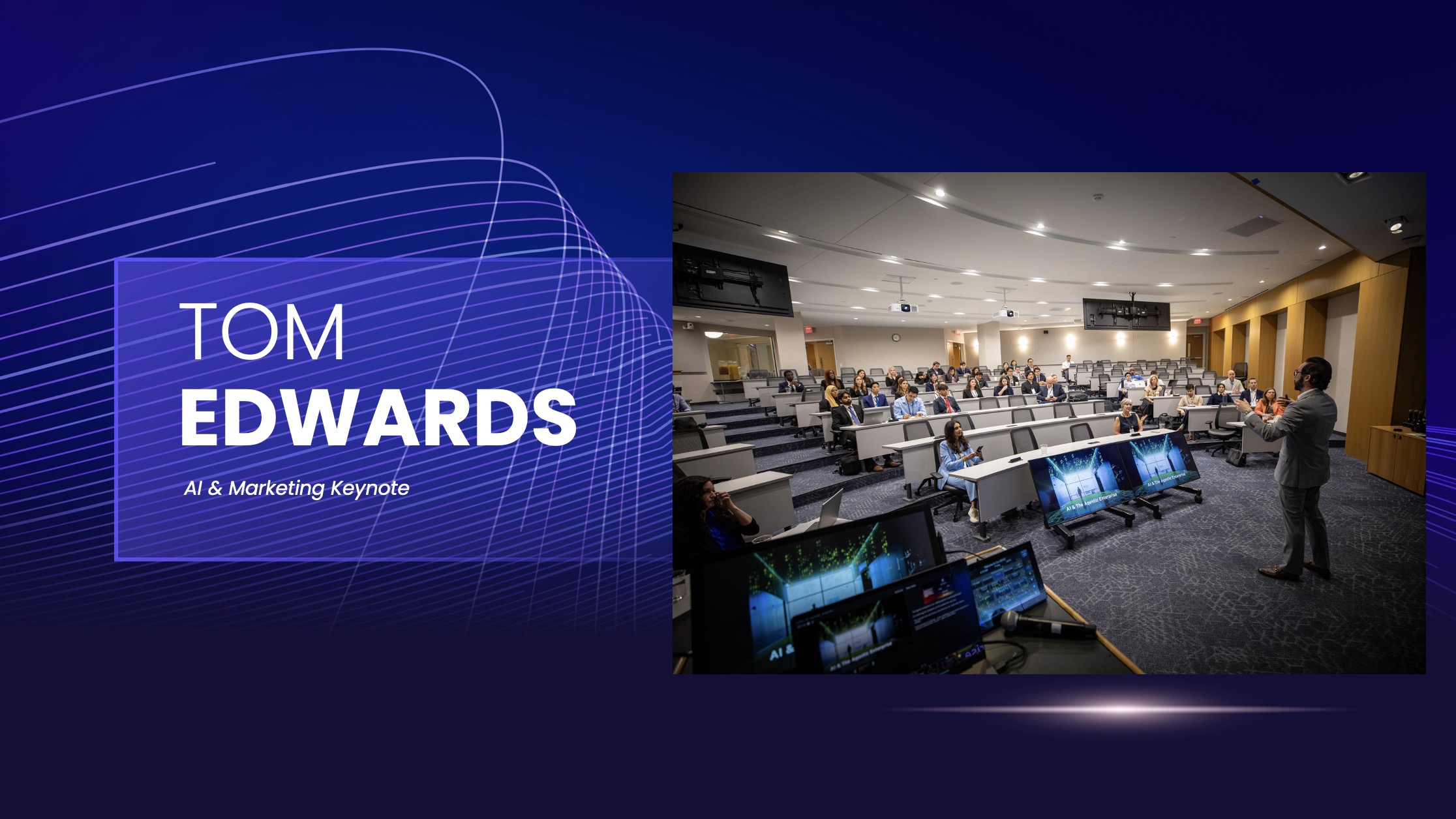
Recently, I had the opportunity to spend time with business students at Southern Methodist University discussing the future of AI and Marketing—and more importantly, the human behaviors shaping that future.
We discussed its not just the technology—it is a mindset shift. We are moving from a world of searching → to asking → to autonomous action. The brands that win in this next era will design human-centric, agentic experiences rooted in ease, trust, and relevance.
In our discussion, I focused on three core themes:
• Behavioral Drivers of AI Adoption – As AI reduces friction, expectations rise. Consumers will increasingly default to experiences that anticipate needs—not react to them.
• The Rise of Human-Centric AI – Despite rapid advancements, this is not just a technology story—it’s a human one. The future belongs to organizations that build around how people—employees, consumers, retailers, and suppliers—want to interact, while also leveraging systems that infer context to craft more intelligent, trust-based experiences.
• Advice for the Next Generation – Don’t chase tools—understand systems. Learn how AI works, how data flows, how to engineer context, and how decisions are made. The most valuable skill in the next decade will be the ability to orchestrate intelligence, not just consume it. We are shifting from creators → editors → co-creators.
Having served as a former CMO, Chief Data Officer, Chief Digital Officer, and Chief Innovation Officer—and now working at the forefront of AI transformation in the consumer sector at EY—I’m seeing this shift unfold across every function, in real time.
What’s clear: the next 18–24 months will define the next decade of competitive advantage. The perspectives shared in the video below aren’t just for students—they’re for leaders actively reimagining their business, their operating model, and their relationship with consumers.
Leave a Reply